Mormon Fundamentalists
Under the Banner of HeavenMormon Fundamentalists are believers who refused to accept the Church of Jesus Christ of Latter-day Saints’ official abandonment of plural marriage. They argued that the change did not revoke Joseph Smith’s revelation and that a later revelation attributed to John Taylor required the practice to continue. The movement’s history, as presented in the book, is not a single institution moving in lockstep: it is a succession of covenants, competing authorities, and breakaway groups, bound by the conviction that religious obligation could outlast a church’s public policy and the law of the state.
Origins and Doctrinal Commitments
Many committed Saints concluded that Wilford Woodruff had erred in issuing the Manifesto and that compliance with it betrayed essential religious principles. In their reading, Section 132 of The Doctrine and Covenants remained scripture: the Manifesto had suspended plural marriage under temporary circumstances, not cancelled it. This distinction allowed them to regard the mainstream church’s change of policy not as a new commandment but as a retreat from an older, still-valid one.
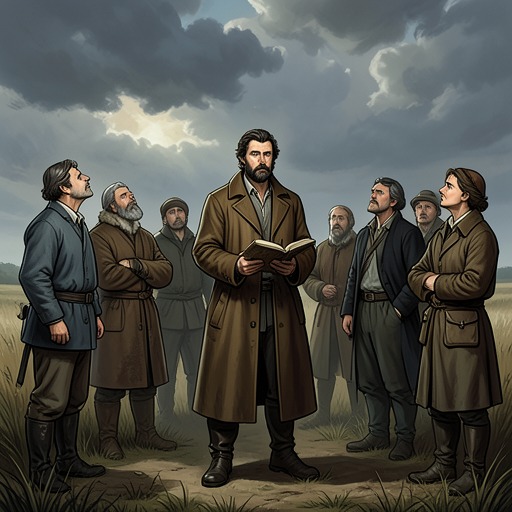
Their defining precedent was John Taylor's 1886 Revelation on Plural Marriage, which Taylor was said to have received while hiding from federal officers seeking people who practiced cohabitation. Taylor asked whether Joseph Smith’s earlier revelation should be abandoned. The answer, as recounted in the book, was that commandments remained binding unless God or his authority revoked them, and that the plural-marriage law had not been revoked. The revelation offered more than an argument about a disputed practice: it supplied a religious basis for refusing the mainstream church’s direction.
Covenant and Continuity
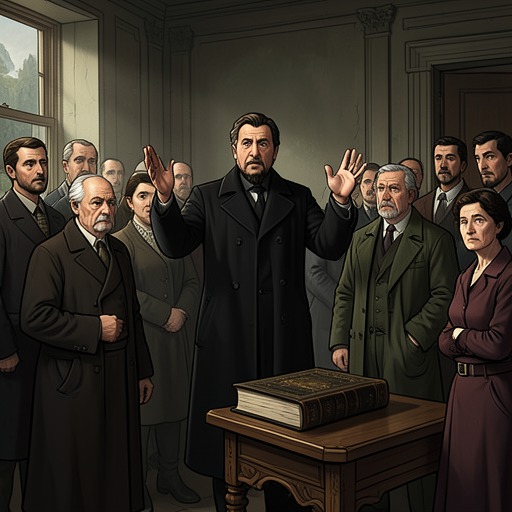
Taylor brought trusted Saints together to consider his revelation. He placed those present under a covenant to defend celestial or plural marriage and to commit their lives, liberty, and property to its support. He warned that some could be ostracized or expelled by fellow church members, and that some might face danger because of their position. He then authorized five of the assembled Saints to perform celestial marriages and to ordain others with the same authority. The intended result was continuity: plural marriage would persist through authorized acts even if the larger church ceased to sanction it.
The meeting lasted eight hours, and its authenticity has been angrily disputed by General Authorities of the Church of Jesus Christ of Latter-day Saints. Taylor also prophesied that, during the church’s seventh president, it would enter temporal and spiritual bondage and that the one mighty and strong would come. The account traces Mormon Fundamentalism’s beginnings to this meeting and the covenant made there. It also describes how the revelation became a sacred reference point for later fundamentalists, including Dan Lafferty and residents of Colorado City, who anticipated a figure who would put the house of God in order.
A Movement Apart, and a Movement of Splits
When the mainstream church sustained the Manifesto and ended official support for plural marriage, it began moving, cautiously and then decisively, toward American social norms. The fundamentalists rejected that direction. They pledged to uphold Joseph Smith’s teachings, especially plural marriage, and Taylor’s covenant, regardless of the choices made by the rest of the church or the wider society. The book presents this commitment as continuing into the twenty-first century, while also stressing that Mormon Fundamentalism did not remain unified. Its adherents have divided into rival sects since the first determined polygamists separated from the main church.
That history of division is visible in the later conflict between Warren Jeffs and Winston Blackmore. Jeffs removed Blackmore from his leadership position in Bountiful, British Columbia, and threatened to expel him. He installed Jimmy Oler as the Canadian branch’s new bishop, but at least half of the Bountiful community remained loyal to Blackmore. The account describes the prospect that Canadian fundamentalists might leave Jeffs’s church in Colorado City to follow Blackmore. A shared commitment to plural marriage, in other words, did not settle who could interpret doctrine or command allegiance; the movement’s defining religious continuity coexisted with recurring struggles over leadership and succession.
Law, Community, and Public Identity
The movement’s claims also met the authority of civil law. Polygamy was a crime in every U.S. state and in Canada, while its practitioners asserted that their home and religious life should be protected from government interference. The tension became stark when Ruth Stubbs left Colorado City on February 6, 2002, with her two children and appeared on Phoenix television, alleging abuse by her husband and arguing that polygamy was inherently abusive. She was nineteen, pregnant with her third child, and had left school after sixth grade. The account says she had been told at sixteen that she would marry Rodney Holm within twenty-four hours; she wanted to marry someone nearer her own age, but after resisting and asking for time, she was pressed by her older sister, already one of Holm’s wives, until she agreed. Her departure made a private marriage a public dispute about coercion, religious liberty, and the protection of those who left.
The book also distinguishes this fundamentalist movement from the larger public culture of the mainstream church. At the annual Hill Cumorah Pageant, more than ten thousand Saints gathered for a free, elaborate outdoor production; more than 95 percent of attendees already belonged to the church. The pageant functioned chiefly as a communal celebration of faith, even as the church presented it as a tool for conversion. Set beside fundamentalists’ defense of plural marriage and their disputes with civil authorities, this scene shows why Mormon identity cannot be treated as a single position: a large public institution and smaller groups claiming fidelity to older teachings occupied sharply different relationships to doctrine, law, and American society.
Historical Significance
Mormon Fundamentalists preserved a religious counterclaim to the mainstream church’s change of course. Their case rested on scriptural continuity, a revelation attributed to John Taylor, and a covenant meant to transmit authority and practice beyond the institutional decision to end plural marriage. Yet the history traced here is not simply one of resistance to assimilation. It is also a history of contested legitimacy: who may receive revelation, authorize marriages, lead a community, or decide whether a religious command outweighs civil law. The movement endured through that unresolved tension, but its shared principles did not prevent internal fracture or public conflict.